Winter in the Treasure Valley
Winter in Boise: real snow, sunny days, and a ski hill in your backyard.
Boise winter is a genuine season, not a token one: about 17 to 18 inches of snow a year, clear sunny days between storms, and the occasional valley inversion that keeps the air still and hazy. It is also the season that makes Bogus Basin, the nonprofit ski area 16 miles north, feel like a neighborhood amenity. Here is what winter actually feels like and a first-winter checklist for movers.
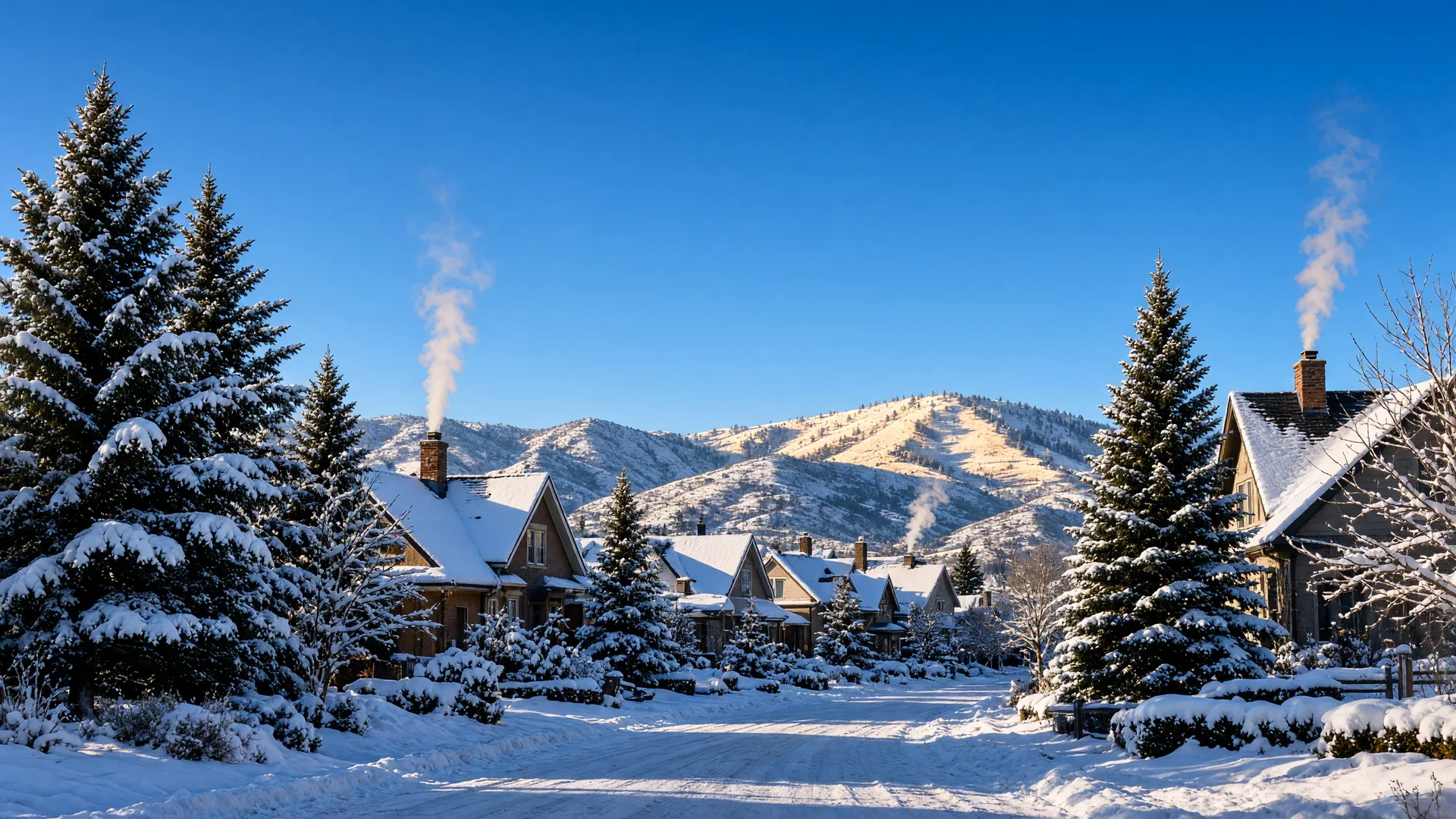
What to expect
Snow, cold, and the occasional inversion
Winter in Boise is cold but sunny in between storms. Averages are the National Weather Service 1991 to 2020 normals for the Boise area, and the snow figure is the same source.
December
39 / 25°F
The snowiest stretch begins; short, cold days with clear skies between storms and about 1.5 inches of precipitation.
January
38 / 25°F
The coldest month and the heart of the snow and inversion windows, with lows near 24 degrees.
February
45 / 28°F
A turn milder, still snowy early, and the season starts to loosen by month's end.
Snow. Boise averages about 17 to 18 inches of snow a year, mostly November through early March. The valley clears quickly; the passes to Bogus Basin and the mountains hold snow all season.
Inversions. Sunny high-pressure days trap cold air in the valley, hazing the air and slowing the commute. Watch the Idaho DEQ air-quality alerts and burn restrictions during inversion stretches.
Climate figures follow the National Weather Service normals for the Boise area, 1991 to 2020 (weather.gov/boi/climate). Confirm current data with the National Weather Service before planning around any figure.
What locals do
Winter in Boise is a snow-sport season, not a shut-in season
When snow falls, Boise goes to the mountains during the day and comes back to town for the evening. The winter rhythm is built around three anchors.
Bogus Basin
A nonprofit mountain resort about 16 miles north of downtown with roughly 2,600 acres of terrain, night skiing, and a typical season from late November into April. It is a 45-minute door-to-snowball ritual for locals.
Foothills & river trails
When the valley clears, the Greenbelt and lower foothills trails stay open for cold-weather walks and runs, with the Ridge to Rivers system packing snow into groomable terrain higher up.
Holidays & lights
Downtown Boise and the town centers run holiday lights, tree lightings, and winter markets through December, with the Garden City Greenbelt lights and town parades filling the calendar. Confirm each season's events with organizers.
Winter driving
Most valley winter driving needs just good tires and space, but the passes and Bogus Basin Road see real snow. Check the current Idaho Transportation Department chain and studded-tire rules before you drive the hills, and give yourself extra time on the first snowy days of the season.
If you're moving in winter
A moving-in-winter checklist
Winter moves are less crowded on the market and at the movers, but they come with weather and a shorter daylight window. A few steps make it smooth.
- Build in a weather buffer. A storm can close a pass or delay a van. Give your move a day of cushion and a plan B if snow slows your moving day.
- Transfer utilities before you arrive. Power, gas, water, trash, and internet early means a warm, lit, online house on day one. Confirm the exact providers for your address.
- Prepare for the 30-day sprint. Idaho gives new residents 30 days to transfer a driver's license and register vehicles. First snowy weeks are a good push to knock this out while roads are calm.
- Enjoy the perks of winter move-in. Off-peak moving dates, a mild market, and the chance to be settled before the busy spring season. Ask us how winter timing shifts inventory and pricing in the current market.
FAQ
Winter questions, answered
How much snow does Boise get in a normal winter?
Boise averages roughly 17 to 18 inches of snow a year, with most of it falling from late November through early March and December and January the snowiest months, per the National Weather Service 1991 to 2020 normals. Some winters are barely white, others stack up a few strong storms, so the average hides a lot of year-to-year variation.
What is a Treasure Valley inversion?
An inversion happens when a layer of warmer air settles over the valley and traps cooler, denser air near the surface, usually on clear winter nights under high pressure. Because the trapped air can't escape, pollution can build up, and the Idaho DEQ may issue air-quality alerts and burn restrictions. It is the flip side of the sunny, crystal-blue days.
Do I need studded tires or chains to drive in the Boise area?
Most valley driving needs only all-season or winter tires and good spacing in snow. The passes and routes up to Bogus Basin and into the surrounding mountains see real snow, so chains or studded tires become relevant there. Idaho allows studded tires for a set seasonal window; check the current Idaho Transportation Department rules and confirm the chain law for the pass you are driving before you go.
The best time to start a winter move is before the first storm.
Tell us your timeline and budget, and we will line up the season: when to visit, when to send the movers, and the 30-day Idaho checklist, all paced for the weather.